Translation of the attached article:
Opening a sole proprietorship is a suitable option for small and medium-sized business owners, as it enables them to manage the establishment freely and make decisions without referring to partners. It is a step that allows individuals to enter the business world under a legally recognized entity.
A sole proprietorship allows its owner to carry out commercial activity in their personal name without the need for a partner. This process is completed according to certain conditions and steps, which we will explain in this article, in addition to clarifying the required documents and fees.
Conditions for Opening a Sole Proprietorship in Saudi Arabia
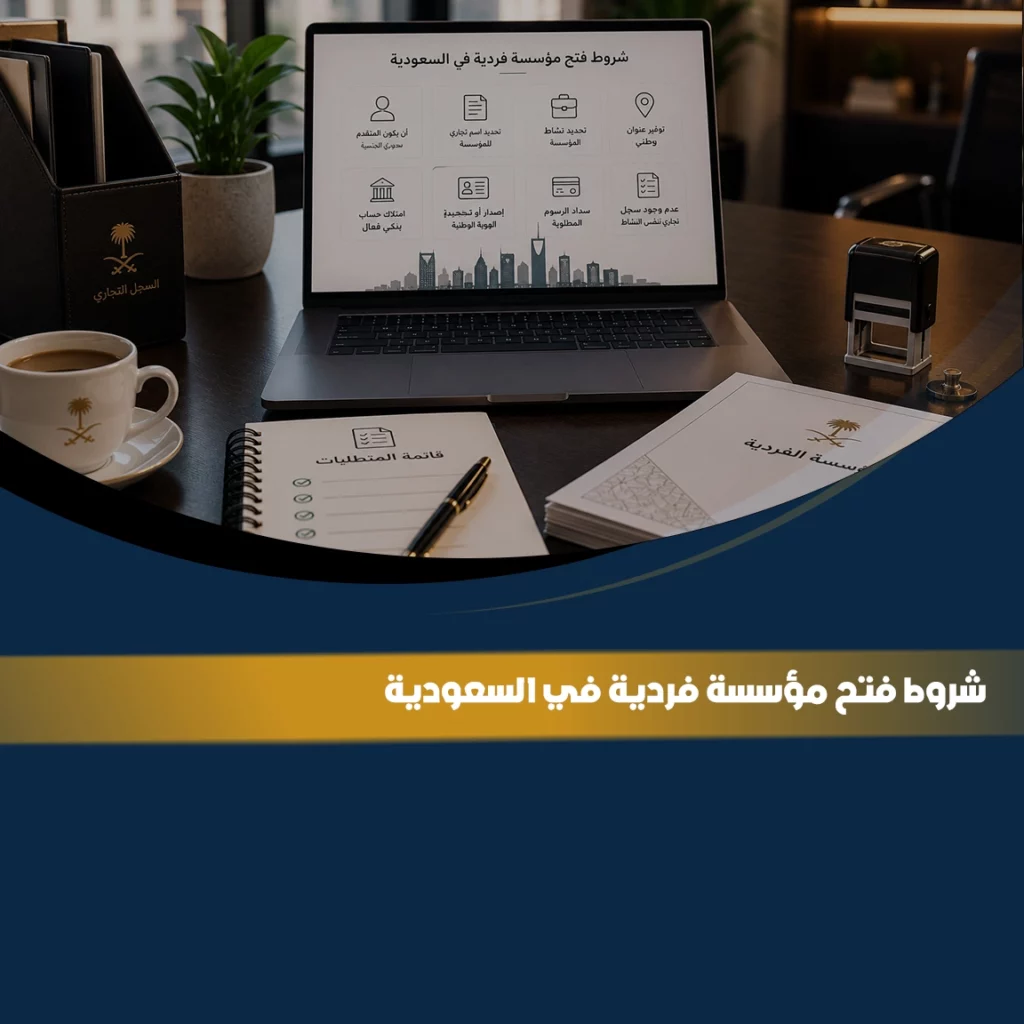
There are a number of basic conditions and requirements for opening any sole proprietorship. Below, we explain the conditions that must be met to open an establishment legally and properly:
- The applicant must hold Saudi nationality or be a citizen of one of the Gulf Cooperation Council countries. A sole proprietorship may also be opened for foreigners, but under special controls and through investment licenses from the Ministry of Investment.
- The applicant must be at least 18 years old. If the applicant is a minor, the establishment may be opened under the supervision of the legal guardian in accordance with the provisions of guardianship and custodianship.
- A commercial register must be opened, and the activity must be specified accurately. The activity must be among the permitted activities according to the classifications approved on the Meras platform or the commercial register.
- The applicant must not have been convicted in cases involving integrity or honesty, or previously declared commercially bankrupt.
- An official national address must be registered through Saudi Post, and it will be considered the legal headquarters of the establishment.
- There must be a valid commercial register and a tax file number.
- The necessary permits to practice the activity must be obtained, as some activities require a municipal license or a license from a specialized authority such as the Ministry of Media, the Saudi Food and Drug Authority, and others.
If you are preparing to establish a sole proprietorship, start by understanding how to open a commercial register so that you know the first legal step to practice the activity.
Steps to Open a Sole Proprietorship in Saudi Arabia
A sole proprietorship can be opened in Saudi Arabia fully online, and the steps to follow are as follows:
- Access the Meras portal or the Ministry of Commerce website.
- Click the option to establish a sole proprietorship.
- Fill in the basic data, such as the establishment name, capital, activity type, and city.
- Link the establishment to a national address.
- Pay the commercial register fees electronically.
- The unified number and commercial register of the establishment are then issued.
Required Documents for Opening a Sole Proprietorship in Saudi Arabia
The basic documents required to open a sole proprietorship in Saudi Arabia are as follows:
- National ID, or residency permit in the case of foreign investors.
- National address.
- A bank account in the owner’s name.
- A copy of the title deed or lease contract for the establishment’s headquarters, for some activities.
- Approval from the relevant authorities if the activity requires a special license.
Fees for Opening a Sole Proprietorship in Saudi Arabia
The fees required to open a sole proprietorship differ depending on several factors. Below, we explain the required fees in detail:
- The fee for issuing the main commercial register is SAR 200 annually. This is a fixed fee paid upon issuance and renewal.
- The fee for issuing a branch commercial register is SAR 100 per branch annually. These fees apply if there are additional branches for the establishment.
- Chamber of commerce subscription fees range between SAR 3,000 and SAR 5,000 annually, and their value differs according to the commercial register grade.
- The activity practice license may cost up to SAR 1,000, and it differs according to the competent authority and the nature of the activity.
- Professional or municipal license fees are variable fees required for some commercial or service activities.
- Lease contract documentation fees may reach SAR 500.
- Document attestation or translation fees range between SAR 100 and SAR 250, and they differ according to the language and number of documents.
- National address subscription fees.
- Qiwa platform fees are estimated at approximately SAR 1,200 annually.
- Labor office fees are SAR 800 monthly for each non-Saudi worker.
- Social insurance is estimated at 9% of the basic salary, and it is calculated monthly for the non-Saudi worker.
Before opening a sole proprietorship for an activity based on a well-known trademark, it is important to learn about the Franchise Law, to understand the conditions governing the relationship between the franchisor and the franchisee.
Why Choose Nawaf bin Awad Al-Harbi Law Firm When Opening a Sole Proprietorship?
Nawaf bin Awad Al-Harbi Law Firm provides specialized legal services that help project owners and entrepreneurs establish their entities according to the applicable laws in Saudi Arabia. The firm’s services in this field include:
- Providing legal consultations regarding the conditions for opening a sole proprietorship and choosing the appropriate activity.
- Assisting in completing the procedures for opening a sole proprietorship and issuing the commercial register.
- Reviewing documents and ensuring that legal requirements are fulfilled.
- Providing legal advice regarding the required licenses according to the nature of the activity.
- Following up on procedures related to amending establishment data or adding activities in the future.
- Providing legal support to address any issues that may face the establishment owner during the incorporation stages or after starting the activity.
Contact now with the best companies and establishments lawyer to ensure that your sole proprietorship is opened in Saudi Arabia legally and smoothly, while following up on all official procedures, fulfilling the legal conditions, and avoiding any future mistakes or financial penalties.
Conclusion
Knowing the conditions for opening a sole proprietorship is important for anyone who wants to open their own establishment without the need for a partner. A sole proprietorship is a suitable option for those who want to enter the business world, open an establishment, and manage it completely without referring to a partner or anyone else, making it a suitable choice for small and medium-sized projects.
Before opening a sole proprietorship as an investor or resident, you may need to understand the investment conditions in Saudi Arabia so that you can start your activity according to the approved legal controls.
Frequently Asked Questions
What Is a Sole Proprietorship?
It is one type of commercial entity owned by one person only and managed directly by that person. There are no partners in a sole proprietorship, and its owner is fully responsible for all its legal and financial obligations. This means that the owner of the establishment directly bears the establishment’s debts.
Can a Sole Proprietorship Be Opened in Saudi Arabia Without a Commercial Register?
No. No commercial activity may be practiced without a commercial register, because this is unlawful and exposes the owner to fines and legal accountability. Therefore, when opening a sole proprietorship, it is necessary to ensure that a commercial register is issued.
What Is the Cost of a Commercial Register When Opening a Sole Proprietorship in Saudi Arabia?
The basic commercial register fee is SAR 200 annually, in addition to chamber of commerce subscription fees, which differ according to the city and activity. These fees are paid electronically when opening the establishment.